



Pneumatic Drill Rig - Fast, Durable, Low-Cost Rock Drilling
Pneumatic Crawler Drilling rig Machine: field notes, specs, and what buyers are really asking
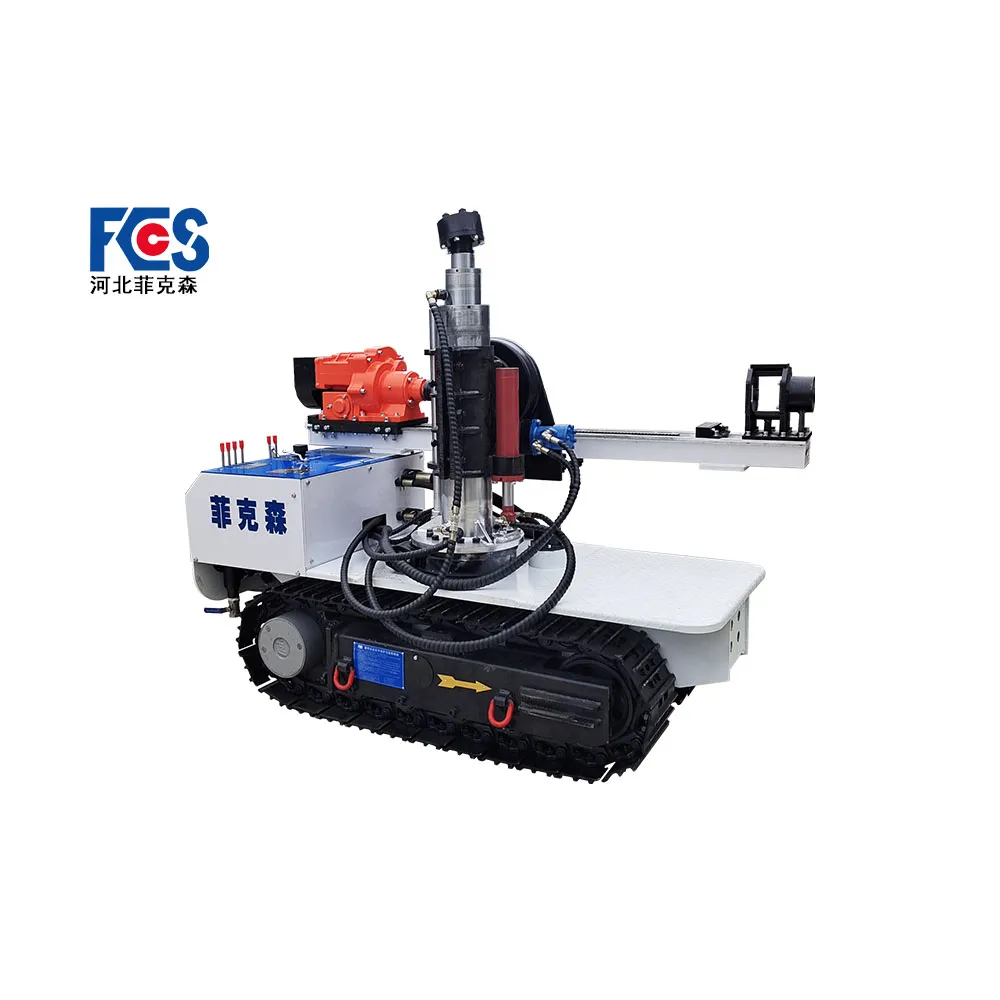
If you’re eyeing a Pneumatic Drill Rig for coal seam work, water exploration, or pressure-relief holes, you’re not alone. Demand has quietly ticked up this year—partly due to ventilation and water-injection programs in coal provinces, partly because smaller mines want mobile, low-maintenance rigs that don’t drag a diesel engine everywhere. This particular model comes out of the Shijiazhuang High-tech Industrial Development Zone, Hebei, which—speaking candidly—has become a serious cluster for mid-size rig manufacturing.
What’s trending (and why it matters)
In underground coal and shallow exploration, air-powered rigs are, surprisingly, back in favor. Fewer electrics, fewer hydraulics—less to leak. Many customers say they appreciate the compact crawler footprint and the “park-and-drill” simplicity. To be honest, I’ve seen this play out on sites where access is tight and keeping things intrinsically safer is a daily headache.
Core applications
- Coal seam water exploration and drainage holes
- Water injection and gas pressure relief holes in roadway development
- Small-diameter geological prospecting and grout holes
- Underground headings where a compact, self-propelled crawler is preferred
Product snapshot (indicative)
| Item | Spec (≈ real-world may vary) |
|---|---|
| Model | Pneumatic Crawler Drilling rig Machine |
| Hole diameter | 75–130 mm with standard DTH tooling |
| Depth capacity | Up to ≈120 m (geology & air supply dependent) |
| Working air pressure | 0.7–1.7 MPa |
| Air consumption | 8–15 m³/min (compressor matched) |
| Rotation speed / torque | 0–130 rpm / 900–2100 N·m |
| Crawler gradeability | ≈25° |
| Operating weight | ≈2.8–4.2 t |
| Origin | Shijiazhuang High-tech Industrial Development Zone, Hebei Province |
Process flow and build quality
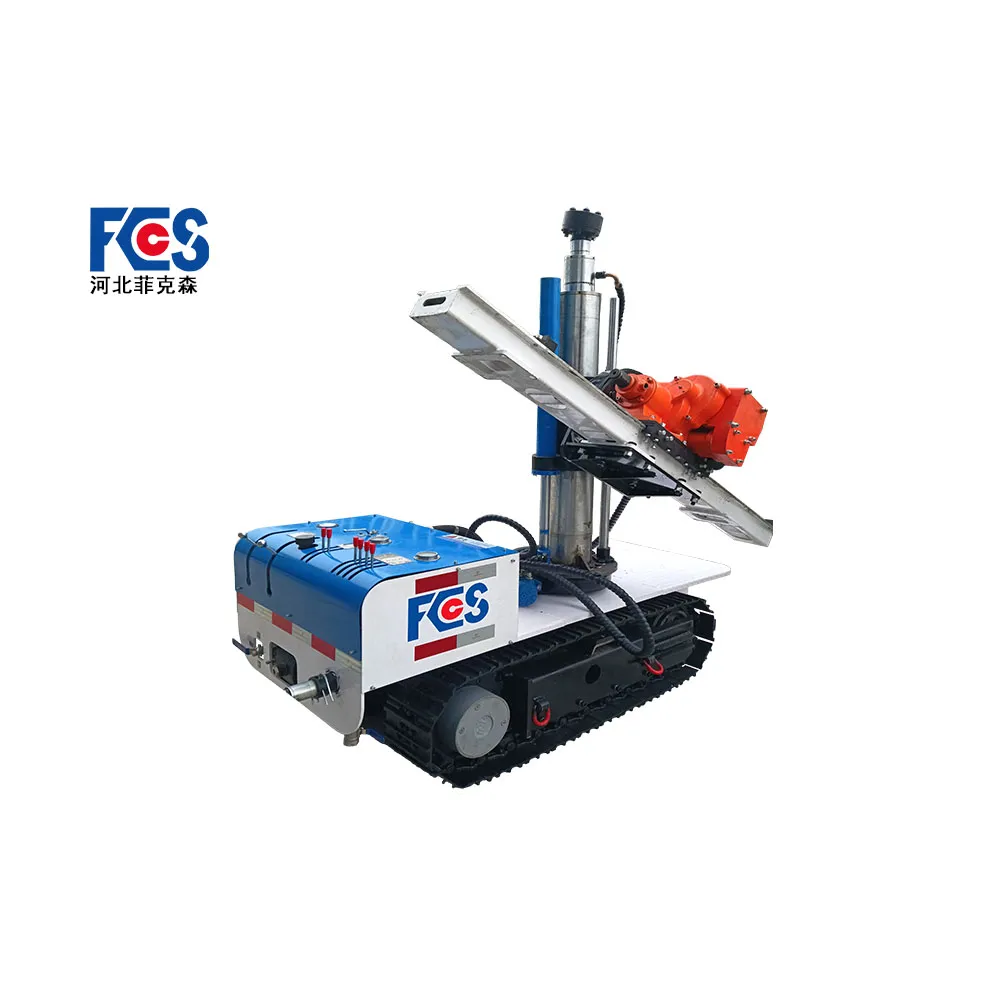
- Materials: high-strength welded steel frame; heat-treated mast rails; abrasion-resistant hoses; NBR/FKM seals.
- Methods: CNC machining of spindle and gearset; shot blasting; powder coat; torque-mark assembly.
- Testing: pneumatic leak and pressure tests; vibration/fastener checks; dimensional QA to ISO 9001; air quality per ISO 8573 guidelines.
- Service life: typically 5–8 years in mines, with overhauls around 6,000–9,000 hours depending on maintenance.
- Industries: coal mining roadway projects, small hydro/geology teams, municipal dewatering.
Why a Pneumatic Drill Rig over hydraulic?
- Simplicity underground: fewer hydraulic circuits; reduced leak risk.
- Lower maintenance footprint; faster daily start-up, honestly.
- Good for water-injection and gas relief where airflow is already on tap.
Vendor comparison (indicative)
| Vendor | Power system | Strengths | Price band (≈) | Lead time (≈) |
|---|---|---|---|---|
| FCCS Drilling (Hebei) | Pneumatic crawler | Compact, coal-seam focused, customization friendly | $18k–$35k | 25–45 days |
| Epiroc (global) | Hydraulic/pneumatic | Robust network, advanced automation options | $65k–$120k | 60–120 days |
| Sandvik (global) | Hydraulic | High durability, analytics-ready | $80k–$150k | 90–150 days |
All pricing/lead-time figures are indicative and vary by configuration and region.
Customization and compliance
- Options: mast height tweaks, crawler width, DTH hammer brand matching, water swivel, dust suppression kit.
- Documentation: ISO 9001/14001 factory systems; CE and MA safety mark available where applicable; built with EN 16228 and ISO 19296 safety principles in mind.
Field results (sample)
Shanxi coal roadway trial, Q2: 95 mm relief holes to 62 m depth. Average penetration 0.9–1.3 m/min in siltstone; compressor at 1.3 MPa, 12 m³/min. Team reported 28% faster set-up vs previous hydraulic unit and cleaner headings (less oil mist). A foreman told me, “It’s small, but it just gets on with the job.” That seems to be the consensus.
Operation notes for a Pneumatic Drill Rig
- Match compressor correctly; check ISO 8573-1 air quality to protect the hammer.
- Torque-check mast fasteners after transit; recheck at 50 hours.
- Adopt dust suppression per site policy (wet drilling or local extraction in line with MSHA/NIOSH guidance).
Citations
- ISO 19296:2018 Mining — Mobile machines underground — Safety requirements: https://www.iso.org/standard/68651.html
- EN 16228 Drilling and foundation equipment — Safety: https://www.en-standard.eu/csn-en-16228-1-drilling-and-foundation-equipment-safety/
- ISO 8573-1:2010 Compressed air — Contaminants and purity classes: https://www.iso.org/standard/41328.html
- NIOSH Mining safety resources (dust control and drilling): https://www.cdc.gov/niosh/mining/