



Rock Bolting Machine for Fast, Safe Support—Why Us?
Field Notes and Buyer’s Guide to a rock bolting machine
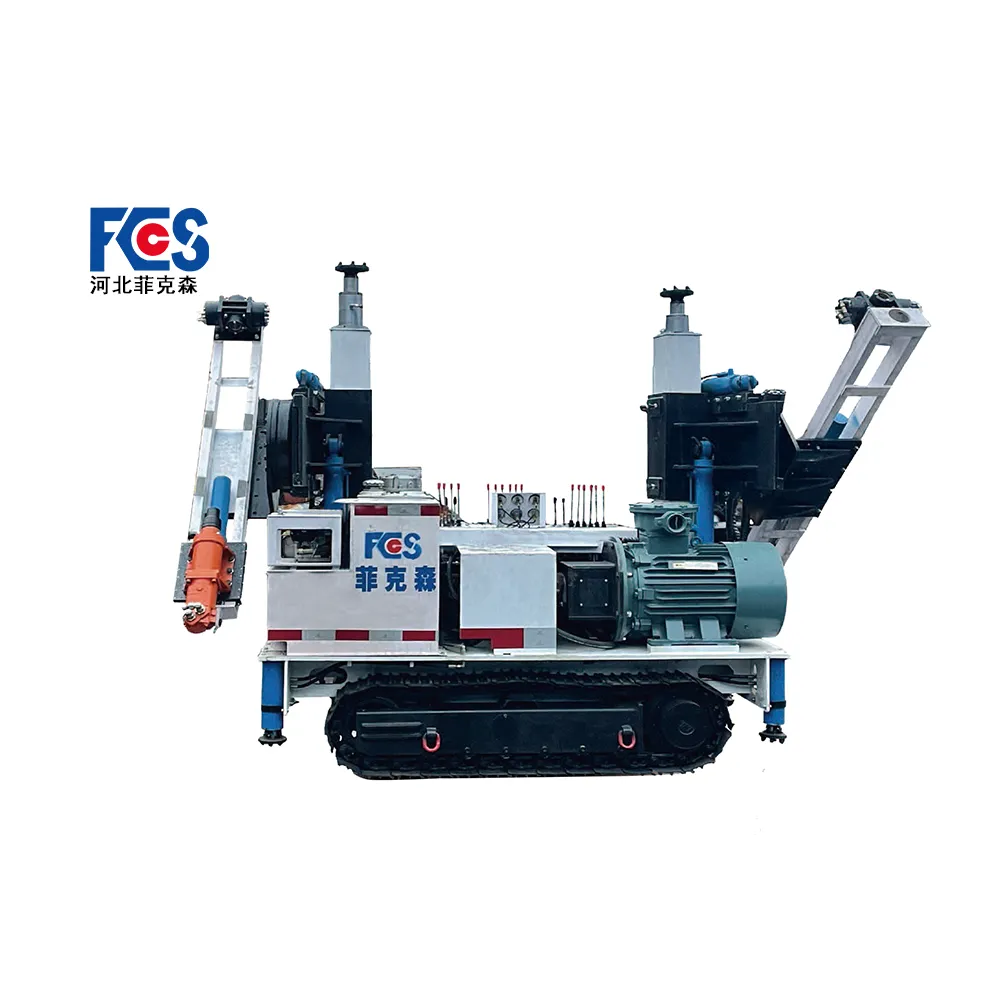
If you’ve spent enough time underground (I certainly have), you know bolting rigs are the quiet heroes. The Double Arm Advanced Bolting Cable Drilling Rig from the Shijiazhuang High-tech Industrial Development Zone, Hebei Province, is one of those machines I keep hearing about on sites that juggle water exploration, pressure relief, gas drainage, and angled geological drilling. It’s not flashy; it just grips into the heading and gets on with it. And yes, traction matters—this crawler chassis has honest-to-goodness bite, the kind that keeps you stable on broken pavement and in wide, damp pits.
What it does, in the real world
In mines where headings change angle day to day, a rock bolting machine with dual arms saves time—one arm handles bolting while the other preps cable holes or water injection. The self-developed excavator crawler chassis offers strong climbing and a reassuringly large ground contact area, which—speaking candidly—translates to less “track dance” on uneven floors and fewer safety briefings about stability.
- Water exploration and injection lines
- Pressure relief and gas drainage drilling
- Angled geological exploration in complex strata
- Underground infrastructure: hydropower caverns, tunneling drifts, metro headings
Industry trends I’m seeing
Three themes keep coming up: tele-remote assists for line-of-fire reduction; cleaner hydraulics with wet drilling/mist; and better data capture (torque, penetration rates, pull-test logs). A modern rock bolting machine that plays nicely with ISO safety layers and digital logs is, frankly, easier to justify to management and inspectors alike.
Indicative specifications
| Model | Double Arm Advanced Bolting Cable Drilling Rig |
| Origin | Shijiazhuang High-tech Industrial Development Zone, Hebei Province |
| Drilling diameter | ≈45–130 mm (real-world use may vary with tooling) |
| Depth capacity | Up to around 120 m, strata-dependent |
| Arms | Dual independent bolting and cable-drilling arms |
| Chassis | Self-developed excavator crawler; high traction; strong climbing; wide ground attachment |
| Power | Diesel 118–150 kW or electrohydraulic 90–110 kW (optional) |
| Rotation/torque | 0–320 rpm; up to ≈950 N·m |
| Hydraulics | 2×70–110 L/min; wet drilling/mist; optional dry collector |
| Safety/compliance | Designed to align with ISO 19296; ISO 9001; CE/MA/ATEX where required (on request) |
Process flow, materials, and testing
Typical cycle: survey and marking → drilling (wet or mist to tame dust) → bolt insertion and torqueing → resin or grout set → pull testing → logging. Structural steel frames (Q345/High-strength equivalents) and wear-resistant rotary heads are common; seals and hoses specify oil- and abrasion-resistant compounds. We’ve seen average pull-out loads of ≈165 kN (n=30) in sedimentary headings following ASTM F432 sampling; torque verification is recorded per site SOP. With diligent maintenance, service life often runs 8,000–12,000 engine hours before major overhauls—tracks, rotary seals, and boom pins are the usual suspects for mid-life refresh.
Vendor snapshot (indicative)
| Vendor | FCCS Drilling (this model) | Vendor X | Vendor Y |
| Arms | Dual | Single | Dual |
| Chassis traction | Large ground contact | Medium | Large |
| Cycle time/bolt | ≈6–10 min | ≈8–12 min | ≈7–11 min |
| Lead time | 6–10 weeks | 12–16 weeks | 10–14 weeks |
| Certifications | ISO 9001; CE/MA optional | ISO 9001 | ISO 9001; CE |
Customization and options
- Power pack choices (diesel or electrohydraulic)
- Arm geometry and feed beam lengths for angled drilling
- Wet/mist suppression, dry collectors, and water pump kits
- ATEX/MA configurations for gassy mines where required
- Tele-remote assist and torque/pull-test data logging
Many customers say they appreciate the straightforward service access; honestly, fewer panels to remove is a small joy on a double-shift week.
Quick case note
Hebei iron-ore headings, mixed strata: the site ran this rock bolting machine for water injection and cable holes on a twin-crew rotation. Logged an ≈18% faster cycle versus their prior single-arm unit and reduced rework after implementing ASTM F432 pull-test sampling each blast round.
Standards and references
- ASTM F432 – Standard Specification for Roof and Rock Bolts and Accessories.
- ISO 19296:2018 – Mining — Mobile machines working underground — Safety requirements.
- EN 1889-1:2011 – Machines for underground mines — Mobile machines — Safety.
- ISRM Suggested Methods for Rock Bolt Testing and Design, International Society for Rock Mechanics.
- MSHA 30 CFR Part 75 (Subpart C) — Roof support; United States Mine Safety and Health Administration.