



Pneumatic Drill Rig: High Power, Low Cost—Ready to Drill?
Pneumatic Crawler Drilling Rig Machine: Field Notes, Specs, and Buyer Tips
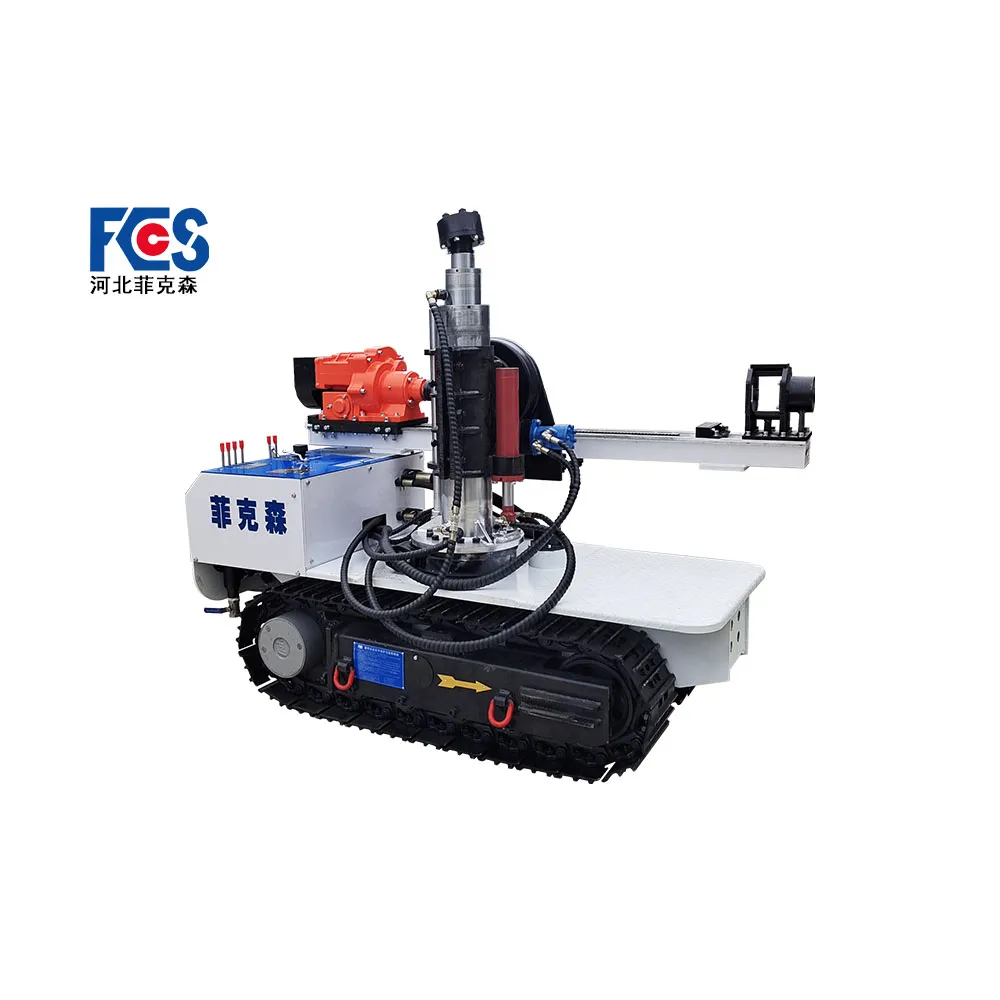
If you work around coal seams or hydro-geology teams, you already know a good pneumatic drill rig doesn’t just “make holes”—it sets the pace for safety, cost, and downtime. This crawler-mounted unit, built in the Shijiazhuang High‑tech Industrial Development Zone, Hebei Province, is a compact, mobile machine aimed at coal seam drilling, water exploration and release, injection, and pressure-relief holes. I’ve seen crews favor it for its small footprint and that “drive it, drill it, done” rhythm.
Industry trends I’m seeing (and hearing on site)
Pneumatic rigs continue to dominate in gassy coal and fractured strata, but with a twist: more wet dust suppression, smarter air management (ISO 8573-compliant filtration), and telematics add-ons for utilization tracking. To be honest, hybrid power is a buzzword, yet in underground coal, air is still king because it’s simple and intrinsically safe when configured properly. Many customers say what matters is reliability, not bells and whistles.
Practical specifications (field-oriented)
| Model | Pneumatic Crawler Drilling Rig Machine |
| Drilling diameter | ≈ 75–150 mm (DTH/rotary; real-world use may vary) |
| Depth capacity | Up to ≈ 120 m (formation-dependent) |
| Working air pressure | 0.7–1.7 MPa |
| Air consumption | ≈ 8–12 m³/min (by hammer size) |
| Rotation speed / torque | 0–120 rpm / up to ≈ 2,200 N·m |
| Travel & gradeability | Crawler, ≈ 25° grades |
| Weight | ≈ 2.6 t |
| Noise at operator | ≈ 92 dB(A) with mufflers; use hearing protection |
| Dust control | Wet injection / water mist at bit |
| Controls | Mechanical; optional remote pendant |
Where it earns its keep
- Coal seam exploration, gas drainage, and pressure-relief drilling
- Water exploration/release in fractured rock
- Pre-injection holes for dust suppression
- Confined, uneven underground roadways where mobility matters
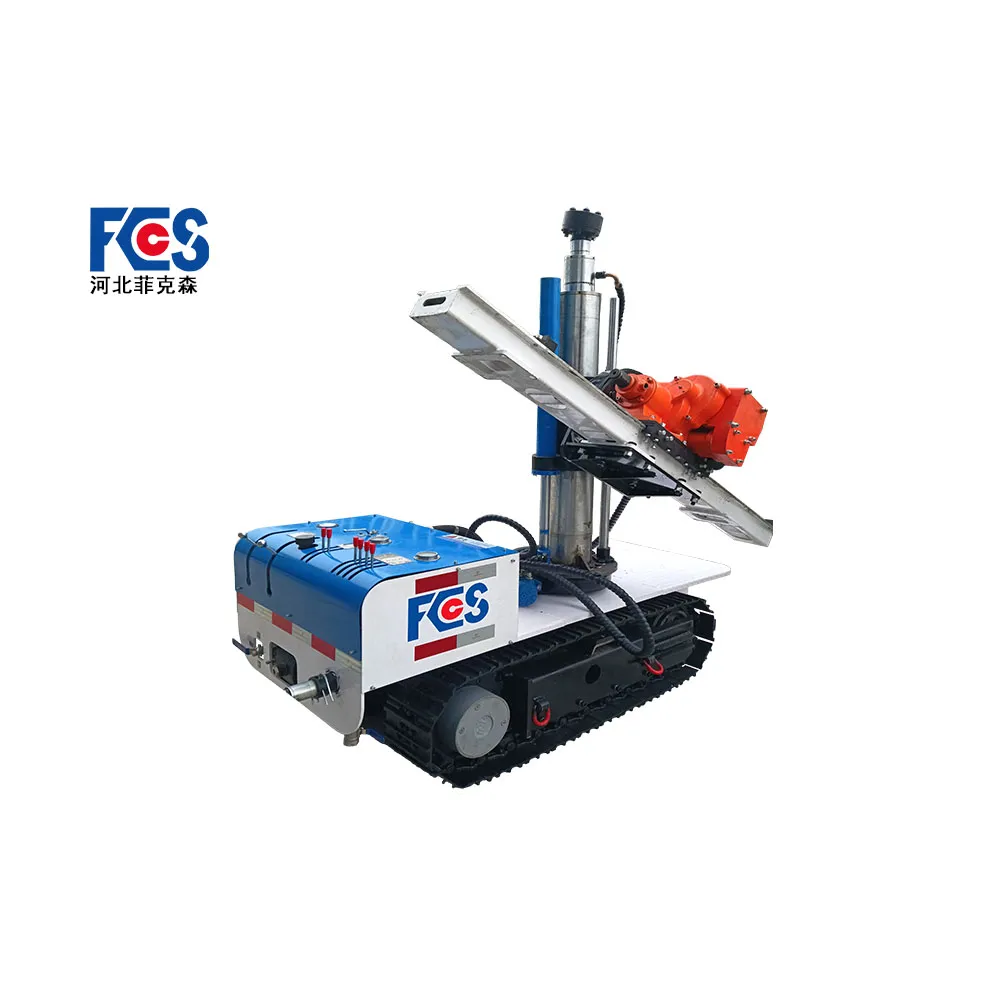
Advantages? Compact footprint, fast tramming, and straightforward upkeep. It seems crews appreciate the simple mechanical control logic—less to fail at 2 a.m. That said, a pneumatic drill rig still lives or dies by compressor quality and air filtration.
Build process, materials, and tests
Frame uses Q345B steel; high-stress pins/rods in 42CrMo. Welds are qualified per ISO 3834, shot-blasted, and epoxy-coated. Critical joints get MT/UT (ISO 17638/17640). Pneumatic circuits are leak-tested; air quality verified to ISO 8573-1 class targets. Final acceptance checks align with EN 16228 safety principles. Typical service life before major overhaul: ≈ 8,000–12,000 hours, assuming routine greasing and filter discipline.
Vendor snapshot (what buyers usually compare)
| Item | FCCS Drilling (this unit) | Global Brand A | Regional Vendor B |
|---|---|---|---|
| Purchase price | Lower-mid | High | Low |
| Parts lead time | ≈ 7–14 days | ≈ 3–10 days | Varies |
| Air requirement | 8–12 m³/min | 10–14 m³/min | 8–10 m³/min |
| Telematics | Optional | Standard | Rare |
| Certifications | ISO 9001; CE (on request) | CE; ISO suite | Varies |
| Warranty | 12 months typical | 12–24 months | 6–12 months |
| Best for | Cost-focused mines | Feature-heavy fleets | Local support first |
Customization options
- Hammer size and rod threads (API, taper)
- Water-injection kits and dual-stage filtration (ISO 8573-1 classes)
- Remote pendant, lighting, and low-profile canopy
- Rubber vs. steel tracks; corrosion package for wet headings
Field results (quick cases)
Shanxi coal panel: 94–110 mm holes to 85 m; average penetration ≈ 1.2 m/min in siltstone; deviation
Compliance snapshot: follow EN 16228 safety principles, OSHA 1910.95 for noise, and MSHA/NIOSH guidance on respirable dust underground. A pneumatic drill rig with wet suppression and ISO 8573-class air goes easier on valves, seals, and lungs.
Note: Specs above are typical for this class; confirm final configuration with the factory. Origin: Shijiazhuang High‑tech Industrial Development Zone, Hebei.