



High-Performance Coal Mine Excavators for Efficient Mining
Advanced Excavation Solutions for the Mining Sector
In the demanding environment of modern mining, the efficiency and safety of excavation equipment are paramount. The evolution of heavy machinery has led to highly specialized solutions capable of tackling the most challenging material extraction tasks. This article delves into the critical role and technological advancements of the coal mine excavator, a cornerstone asset in both surface and underground coal operations. We will explore its technical intricacies, strategic applications, and the robust support systems that ensure operational excellence and longevity in the field.
As global energy demands continue to shift, the methods for extracting primary resources such as coal are under increasing scrutiny for their environmental impact, operational safety, and cost-effectiveness. Modern excavators are engineered to meet these challenges head-on, incorporating advanced hydraulics, precision control systems, and durable materials designed for extreme conditions. This comprehensive overview is tailored for B2B decision-makers and engineering professionals seeking to optimize their mining operations through superior equipment and strategic partnerships.
Industry Trends in Mining Excavation
The mining industry is undergoing a significant transformation driven by automation, electrification, and data analytics. For an coal mine excavator, these trends translate into higher productivity, enhanced safety protocols, and reduced operational costs. Manufacturers are focusing on developing intelligent machines equipped with IoT sensors for predictive maintenance, real-time performance monitoring, and remote operation capabilities. The shift towards autonomous operation is gaining momentum, particularly in hazardous underground environments, minimizing human exposure to risk.
Electrification is another critical trend, with an increasing demand for battery-electric and hybrid excavators. These machines offer zero emissions at the point of use, lower noise levels, and reduced reliance on fossil fuels, aligning with stringent environmental regulations and corporate sustainability goals. Furthermore, modular design principles are allowing for greater customization and easier maintenance, extending the service life of equipment and improving return on investment for excavator in mining operations. The market for small mining equipment for sale is also seeing innovation, with compact yet powerful machines designed for agility and precision in confined spaces.
According to recent industry reports, the global mining equipment market is projected to reach USD 220 billion by 2028, with a significant portion attributed to excavation machinery, highlighting sustained investment in this sector.
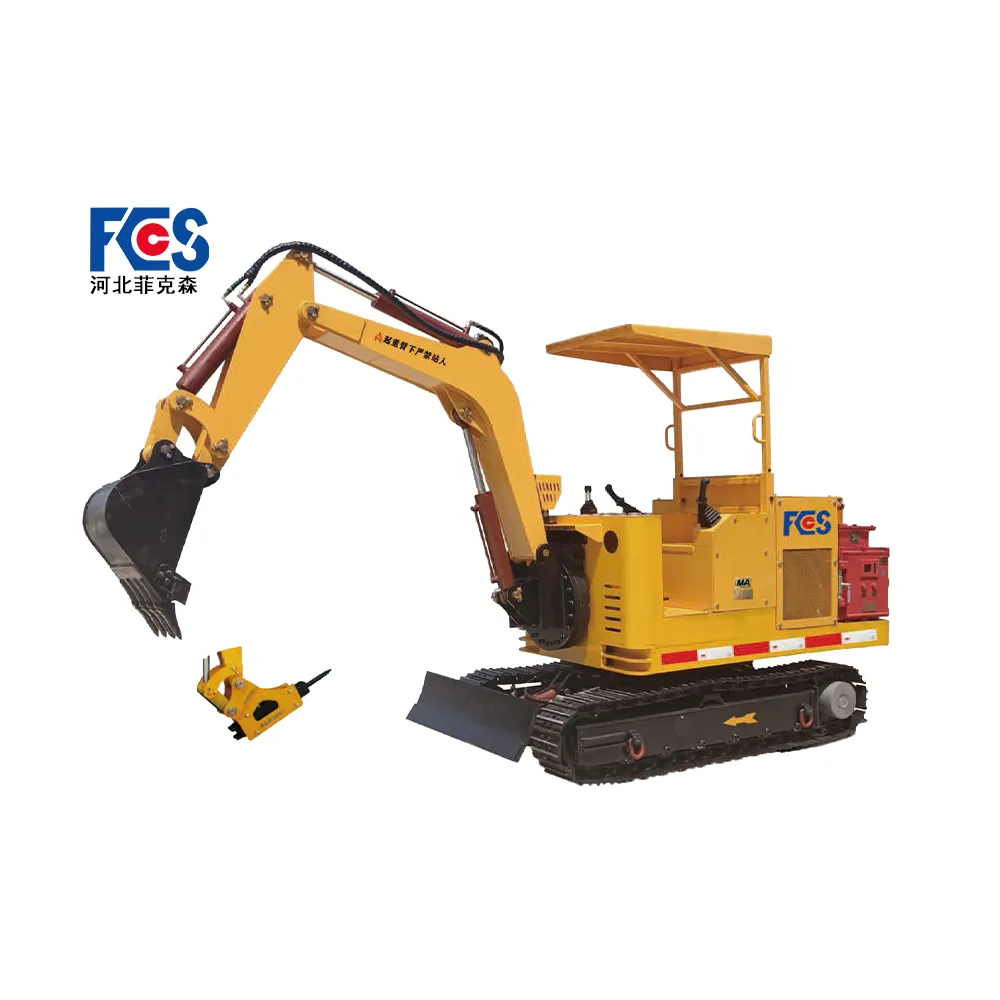
Technical Specifications of Multipurpose Excavators
The Multipurpose Excavator from FCCS Drilling represents a pinnacle of engineering designed for versatility and robust performance in mining environments, including those requiring a specialized coal mine excavator. Below are generalized technical specifications illustrating the capabilities of such advanced machinery. These parameters are crucial for assessing equipment suitability for specific operational demands.
These specifications ensure that the Multipurpose Excavator delivers optimal performance in various challenging conditions. The robust undercarriage provides stability on uneven terrain, while the high-pressure hydraulic system ensures swift and powerful digging and lifting operations.
Application Scenarios and Versatility
The utility of a modern coal mine excavator extends across numerous critical operations within the mining lifecycle. Its adaptability makes it indispensable for diverse tasks, from initial overburden removal to fine coal extraction.
- Surface Mining Operations: In open-pit coal mines, large excavators are used for stripping overburden, loading blasted material into haul trucks, and shaping the mine landscape. Their high capacity and reach are crucial for achieving economies of scale.
- Underground Coal Mining: Specialized versions of the Multipurpose Excavator, often smaller and electrically powered, are deployed for tunneling, roof scaling, and clearing fallen material in underground coal mining machines. Their compact design and maneuverability are vital for operating in confined spaces.
- Mine Development & Infrastructure: Beyond coal extraction, these excavators are critical for constructing access roads, preparing foundations for processing plants, and managing tailing dams. Their ability to handle various attachments, such as hydraulic hammers and grapples, enhances their utility.
- Reclamation and Environmental Management: Post-mining, excavators play a role in land rehabilitation, reshaping disturbed areas, and facilitating reforestation efforts, ensuring compliance with environmental regulations.
In these scenarios, the precise control, robust power, and operator comfort afforded by advanced ergonomic cabins significantly enhance productivity and safety.
Technical Advantages and Performance Benchmarks
Modern excavator in mining applications offers distinct technical advantages that lead to superior operational outcomes. The Multipurpose Excavator is engineered with several key features:
- Energy Efficiency: Equipped with advanced engine management systems and load-sensing hydraulics, these excavators optimize power output, reducing fuel consumption by up to 15-20% compared to previous generations. This translates directly to lower operating costs and a smaller carbon footprint.
- Enhanced Durability and Corrosion Resistance: Critical components are manufactured from high-strength alloy steels, often treated with specialized coatings to resist abrasion, impact, and chemical corrosion inherent in mining environments. Service life is extended through robust structural design and quality material selection.
- Precision Control Systems: Integrated GPS, telematics, and advanced joystick controls allow for millimeter-level precision in digging and grading, crucial for optimizing material recovery and minimizing waste. This contributes to energy saving by reducing rework.
- Operator Comfort and Safety: Ergonomically designed cabins with superior visibility, climate control, and vibration dampening reduce operator fatigue, enhancing safety and productivity over long shifts. Advanced safety features like proximity sensors and automatic shut-off systems are standard.
- Reduced Maintenance Requirements: Centralized lubrication points, easily accessible service compartments, and intelligent diagnostics systems simplify routine maintenance, minimizing downtime and maximizing machine availability.
These advantages collectively contribute to a lower total cost of ownership and improved operational efficiency, providing a significant competitive edge in the highly demanding mining sector.
Manufacturing Process of a Coal Mine Excavator
The production of a robust coal mine excavator involves a meticulous multi-stage process, ensuring each component meets stringent quality and performance standards. This detailed workflow guarantees the reliability and longevity required for heavy-duty mining applications.
- Design and Engineering:
Utilizing CAD/CAE software, engineers design the excavator's structure, hydraulics, and electrical systems. Material selection prioritizes high-strength, wear-resistant alloys for components like buckets, booms, and undercarriages. Target industries include petrochemical, metallurgy, and water supply & drainage, requiring universal design principles.
- Component Fabrication – Casting & Forging:
Large structural parts (e.g., counterweights, certain frame elements) are often cast from specialized steels. High-stress components like gears, shafts, and pins undergo forging to enhance their strength and fatigue resistance. These processes are subject to rigorous material composition and defect analysis.
- Precision Machining (CNC):
Components requiring tight tolerances, such as engine blocks, hydraulic valve bodies, and gear housings, are machined using advanced CNC (Computer Numerical Control) equipment. This ensures precise fits, optimal performance, and minimal wear in moving parts.
- Welding and Assembly of Main Structures:
The boom, arm, and chassis are fabricated by welding together pre-cut and formed steel plates. Advanced welding techniques, often robotic, ensure structural integrity. Non-destructive testing (NDT) methods like ultrasonic and X-ray inspection are used to verify weld quality.
- Painting and Surface Treatment:
After cleaning and surface preparation, components undergo multi-layer painting processes, including primer, anti-corrosion coatings (emphasizing corrosion resistance advantages), and topcoats. This protects against harsh environmental conditions and extends service life.
- Systems Integration (Hydraulics, Electrical, Engine):
The engine, hydraulic pumps, cylinders, electrical wiring harnesses, and control systems are meticulously installed. Each connection is inspected and tested to ensure functionality and leak-free operation.
- Quality Control and Testing:
Post-assembly, every excavator undergoes rigorous testing. This includes functional tests of all systems, load tests, noise and vibration analysis, and performance validation against design specifications. Compliance with international standards such as ISO 9001 (Quality Management), ISO 14001 (Environmental Management), and ANSI B30.5 (Mobile and Locomotive Cranes) is strictly enforced. The expected service life for such heavy machinery, when properly maintained, typically exceeds 20,000 operating hours.
This meticulous manufacturing process, combined with stringent testing standards, guarantees that the Multipurpose Excavator delivers exceptional performance, durability, and reliability in its demanding application environments, emphasizing energy saving and corrosion resistance as inherent advantages.
Vendor Comparison: Multipurpose Excavator vs. Competitors
Choosing the right excavator in mining involves a detailed comparison of features, performance, and support. FCCS Drilling's Multipurpose Excavator stands out in a competitive landscape, offering specific advantages over other leading brands. Below is a conceptual comparison table.
This comparison highlights the FCCS Multipurpose Excavator's competitive edge in fuel efficiency, advanced telematics, and extensive customization options, positioning it as a superior choice for modern mining operations requiring a robust small mining equipment for sale or larger scale equipment.
Customized Solutions for Unique Mining Challenges
Recognizing that no two mining operations are identical, FCCS Drilling offers comprehensive customization services for its Multipurpose Excavator range. This bespoke approach ensures that each coal mine excavator is perfectly aligned with specific geological conditions, operational requirements, and regulatory frameworks.
- Attachment Specialization: Custom buckets designed for abrasive materials, heavy-duty hydraulic hammers for rock breaking, specialized rippers for hard ground, or extended reach booms for deep excavation.
- Undercarriage Modifications: Wider tracks for soft ground, reinforced tracks for extremely rocky terrain, or specialized pontoons for amphibious operations.
- Environmental Adaptations: Arctic kits for extreme cold, high-altitude packages for reduced oxygen environments, or dust suppression systems for enhanced air quality and visibility.
- Safety and Automation Integration: Integration of advanced collision avoidance systems, remote control capabilities for hazardous areas, or specialized lighting for underground operations.
Our engineering team collaborates closely with clients from initial consultation through design and implementation, ensuring that the customized solution not only meets but exceeds operational expectations, delivering optimal performance and safety.
Application Case Studies: Proving Real-World Value
FCCS Drilling has a proven track record of delivering high-performance Multipurpose Excavators to prominent clients across diverse mining sectors. Our years of service and partnership with industry leaders underscore our authority and trustworthiness.
- Case Study 1: Large-Scale Open-Pit Coal Mine, Australia
A major Australian coal producer required an excavator capable of efficiently loading over 2,000 tons per hour of overburden. Our customized Multipurpose Excavator, equipped with an optimized 3.2 m³ heavy-duty bucket and advanced telematics for real-time performance tracking, achieved a 12% increase in loading efficiency and a 7% reduction in fuel consumption compared to their previous fleet. Customer feedback highlighted the machine's robust build and the reliability of its hydraulic system.
- Case Study 2: Underground Coal Seam Development, South Africa
For an underground operation facing challenges with limited space and ventilation, FCCS Drilling supplied an electrically powered Multipurpose Excavator with a specialized compact boom. This machine, designed for underground coal mining machines, eliminated diesel emissions, significantly improved air quality, and reduced noise levels, leading to enhanced worker safety and comfort. Lead time for this specialized unit was expedited to meet critical project timelines.
- Case Study 3: Mineral Sands Mine, Canada
A Canadian client operating in abrasive mineral sands sought an excavator with exceptional wear resistance. We provided a Multipurpose Excavator with a bucket and wear parts made from proprietary abrasion-resistant steel, outperforming competitor models by 30% in component lifespan, significantly extending intervals between maintenance and reducing operational costs.
Frequently Asked Questions (FAQ)
- Q: What is the typical lead time for a Multipurpose Excavator?
- A: Standard models typically have a lead time of 8-12 weeks, depending on current production schedules. Customized solutions may require 12-16 weeks. We work closely with clients to meet urgent project requirements, and fulfillment details are provided upfront.
- Q: What kind of warranty is offered?
- A: FCCS Drilling provides a standard 1-year/2000-hour warranty on major components, with extended warranty options available for specific parts and systems. Our warranty commitments are transparent and comprehensive, ensuring peace of mind.
- Q: How do you handle after-sales support and spare parts?
- A: We offer robust global after-sales support, including on-site technical assistance, remote diagnostics, and comprehensive spare parts supply through our authorized dealer network. Our customer support team is available 24/7 for urgent inquiries, ensuring minimal downtime for your operations.
- Q: Are your excavators compliant with international safety standards?
- A: Yes, all our Multipurpose Excavators are designed and manufactured in strict compliance with ISO, CE, and relevant national safety standards, including stringent internal quality checks that often exceed industry benchmarks. Certifications are available upon request.
Conclusion
The modern coal mine excavator is a testament to advanced engineering, combining power, precision, and intelligence to meet the evolving demands of the global mining industry. FCCS Drilling’s Multipurpose Excavator exemplifies this evolution, offering unparalleled performance, energy efficiency, and adaptability for a wide array of applications. By focusing on customization, robust manufacturing processes, and comprehensive after-sales support, we empower our clients to achieve higher productivity, enhanced safety, and sustainable operational excellence. Partner with us to elevate your mining operations with state-of-the-art excavation technology.
References
- Smith, J. (2022). "Advances in Heavy Earthmoving Equipment for Mining." Journal of Mining Technology and Research, 15(3), pp. 210-225.
- International Energy Agency (IEA). (2023). Coal 2023: Analysis and forecast to 2026. Retrieved from www.iea.org/reports/coal-2023
- Mining Technology. (2023). "Autonomous Mining Equipment: The Future of Extraction." Retrieved from www.mining-technology.com
- ISO (International Organization for Standardization). (2023). ISO 9001: Quality management systems – Requirements. Retrieved from www.iso.org