



Crawler mounted drill rig with high output and low cost?
Looking for a crawler mounted drill rig? Here’s the compact alternative miners actually use
To be honest, most folks who type crawler mounted drill rig into Google are wrestling with tight headings, low backs, and ventilation rules underground. That’s why I pay attention when a pneumatic, frame-supported rig shows up that can do the work without needing tracks at all. The “Drill For Confined Spaces” (model 307/2000) out of Shijiazhuang High-tech Industrial Development Zone, Hebei, is purpose-built for mines—water exploration/injection, pressure relief, and angled geo-probing. It leans on a rigid frame column to carry weight, counter-torque, and vibration, so the driller isn’t fighting the ground support, the rig is.
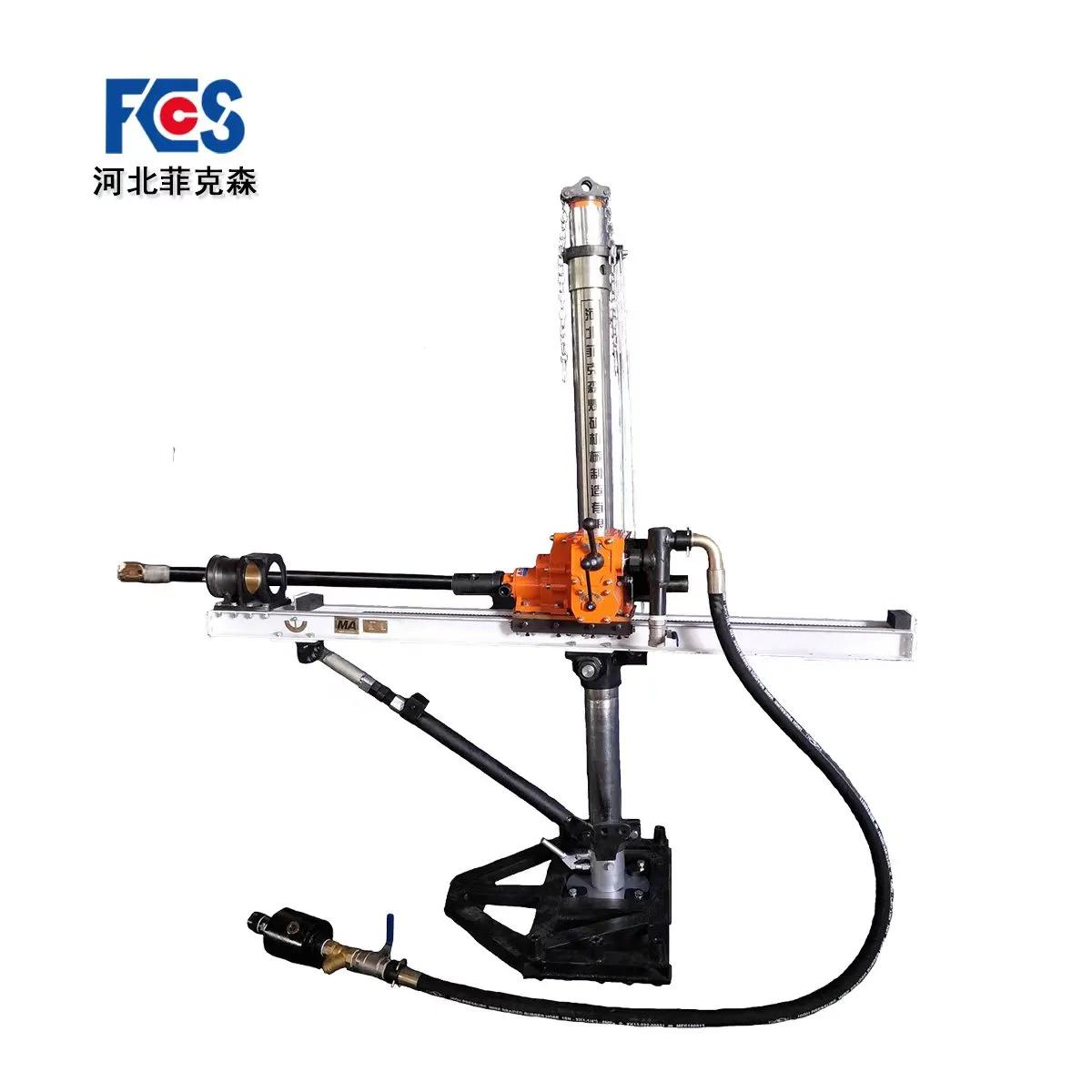
Why this frame-supported rig is trending
Actually, two things: compressed air keeps it simple underground, and the modular frame lets crews drill at awkward angles without breaking set-up every 20 minutes. Many customers say it’s “less drama, more meters.” In fact, it’s a quiet revolution—swap the crawler for a stable column and you shed mass, price, and a lot of maintenance.
Typical specs (real-world use may vary)
| Item | Drill For Confined Spaces 307/2000 |
|---|---|
| Power Source | Compressed air (pneumatic) |
| Feed Stroke | ≈ 2,000 mm |
| Hole Diameter | ≈ 65–165 mm (DTH/top-hammer options) |
| Air Consumption | ≈ 10–16 m³/min @ 0.5–0.7 MPa |
| Thrust / Torque | ≈ 20–35 kN / ≈ 300–800 N·m |
| Drilling Angles | Horizontal to vertical, multi-angle frame positioning |
| Noise | ≤ 98 dB(A) (ISO 3744) |
| Service Life | ≈ 8,000–12,000 h with scheduled maintenance |
| Origin | Shijiazhuang High-tech Industrial Development Zone, Hebei |
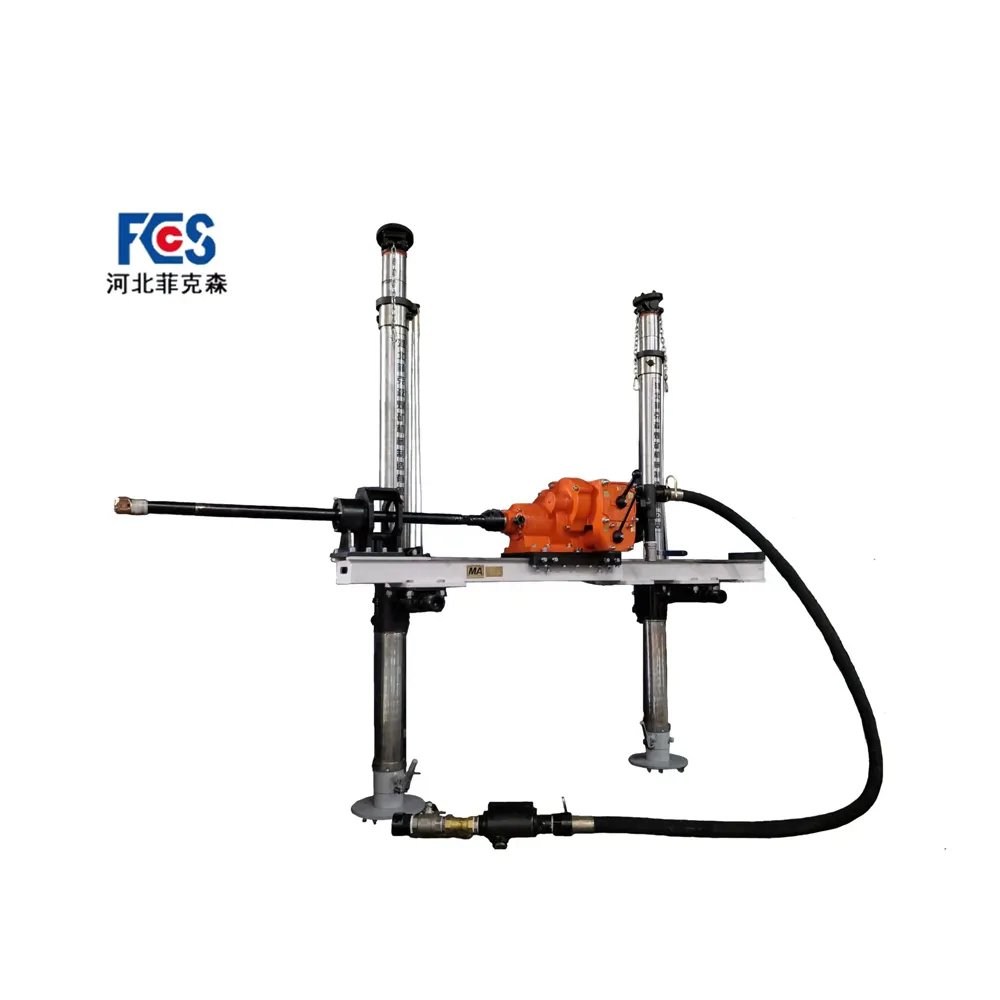
Applications and advantages
- Underground mines: water exploration/injection, pressure-relief boreholes.
- Tunnel and metro: probe drilling, pre-grouting sleeves, drain holes.
- Geotechnical: core sampling at incline angles; short holes in tight drifts.
Advantages: quick set-up on a stable column (less bolt slippage), counter-torque absorbed by the frame, lower mass vs. a full crawler mounted drill rig, and surprisingly tidy vibration behavior around sensitive ground support.
Build, testing, and standards (the nerdy bit)
Materials: high-strength structural steel (≈ S355), heat-treated fasteners, abrasion-resistant slide pads, NBR/FKM seals, SAE-spec hoses. Process flow: CNC cutting → weld & stress relief (ISO 3834) → machining → NDT (MT/UT) on critical joints → assembly → pneumatic leak test at 1.25× working pressure (ISO 4414) → noise mapping (ISO 3744) → paint per ISO 12944 (C3–C4). Air quality target: ISO 8573-1 Class 3, because bad air wrecks seals fast. Typical FAT results from similar rigs: straightness deviation
Certifications commonly requested: ISO 9001, CE per EN 16228 (safety), China MA mining safety mark; ATEX/IECEx packages optional for gassy headings.
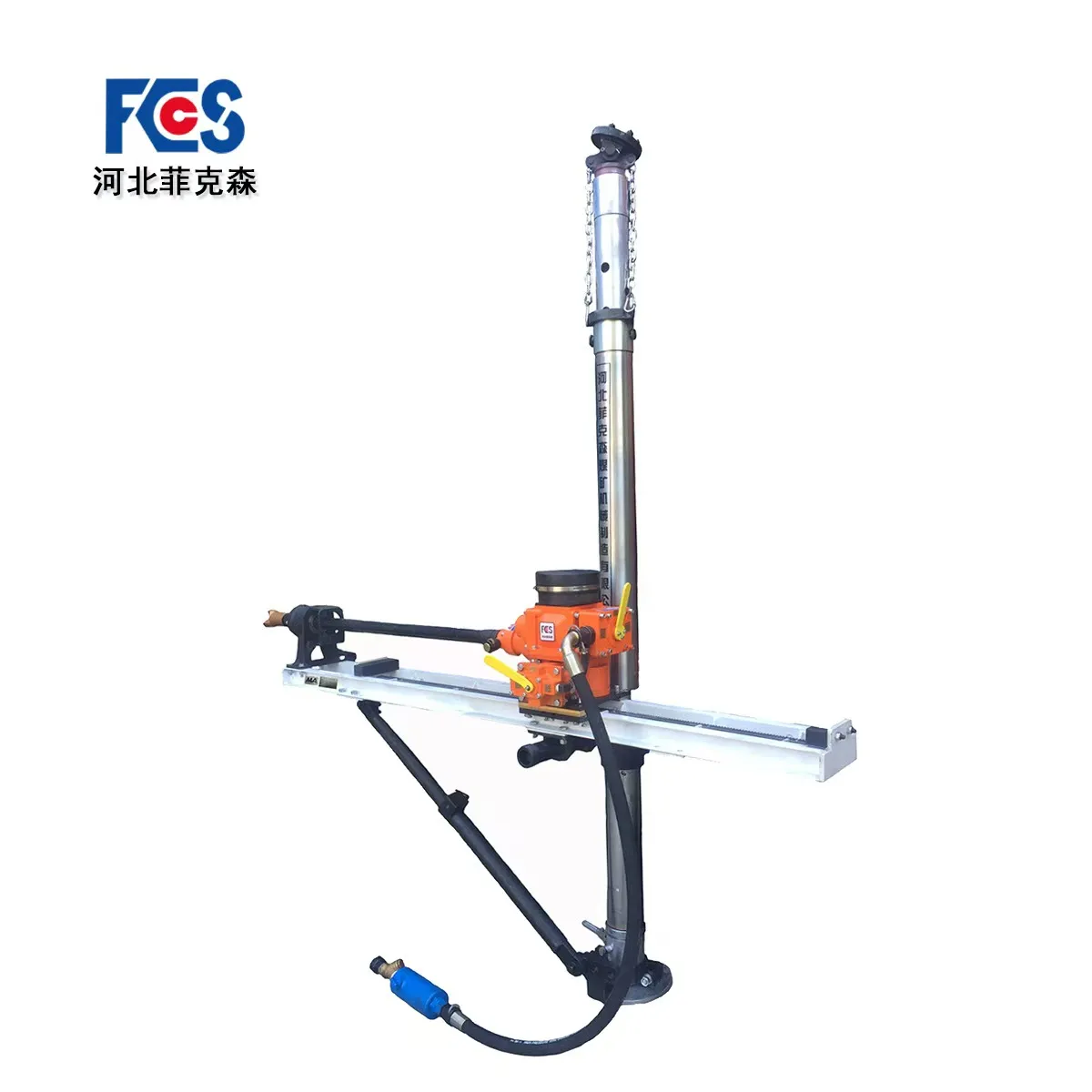
Vendor snapshot (what to look for)
| Vendor | Power/Drive | Certs | Lead Time | Notes |
|---|---|---|---|---|
| Drill For Confined Spaces 307/2000 | Pneumatic, frame-supported | ISO 9001, CE (EN 16228), MA (on request) | ≈ 4–8 weeks | Strong at multi-angle, tight headings |
| Vendor A (compact crawler) | Diesel-hydraulic, tracked | CE, ISO 14001 | ≈ 10–16 weeks | Great mobility; higher capex |
| Vendor B (electro-hydraulic) | Electric-hydraulic, skid | CE, ATEX option | ≈ 6–12 weeks | Low emissions; needs power drops |
Customization menu
- Feed stroke modules (≈ 1.5–2.5 m), mast extensions, swivel heads.
- Bit/rod packages: DTH hammers, top-hammer adapters; thread types per project.
- ATEX/MA-compliant electrics and guarding; dust/mist suppression add-ons.
- Remote pendant or semi-automatic feed; data-logging for QA.
Field note (case study, summarized)
In a North China coal mine, crews used the frame-supported rig to drill 120–150 mm pressure-relief holes on a 12° down-angle along a gassy panel. Setup per hole dropped from ~25 to ~11 minutes versus their old crawler mounted drill rig, largely because the frame absorbed counter-torque and reduced anchor rework. The maintenance foreman told me—offhand, over tea—“less walking, more meters.” That sounds about right.
Authoritative references