



Hydraulic Crawler Drill Rig: Powerful, Efficient, Reliable
Field Notes on a Next-Gen Hydraulic Crawler Drill Rig
I spent a week on a roadway excavation face in Hebei, watching a two-armed bolting rig dance around a roadheader like they’d rehearsed for months. The machine was the CMM2 series “Both Arms Automatically Punch The Anchor Hole In All Directions,” from Shijiazhuang High-tech Industrial Development Zone. Compact, fast, and honestly a bit addictive to watch, it’s built to overhaul the old support cycle with dual-arm automation.
What’s trending (and why it matters)
Across mines and tunnels, automation and data are edging out purely manual bolting. Operators want rigs that sync with roadheaders, keep workers out of the line of fire, and log torque/penetration data for quality assurance. Noise and emissions targets are tighter; CE/MA certifications and EN/ISO-compliant hydraulics are table stakes now. To be honest, uptime and parts availability still make or break a project.
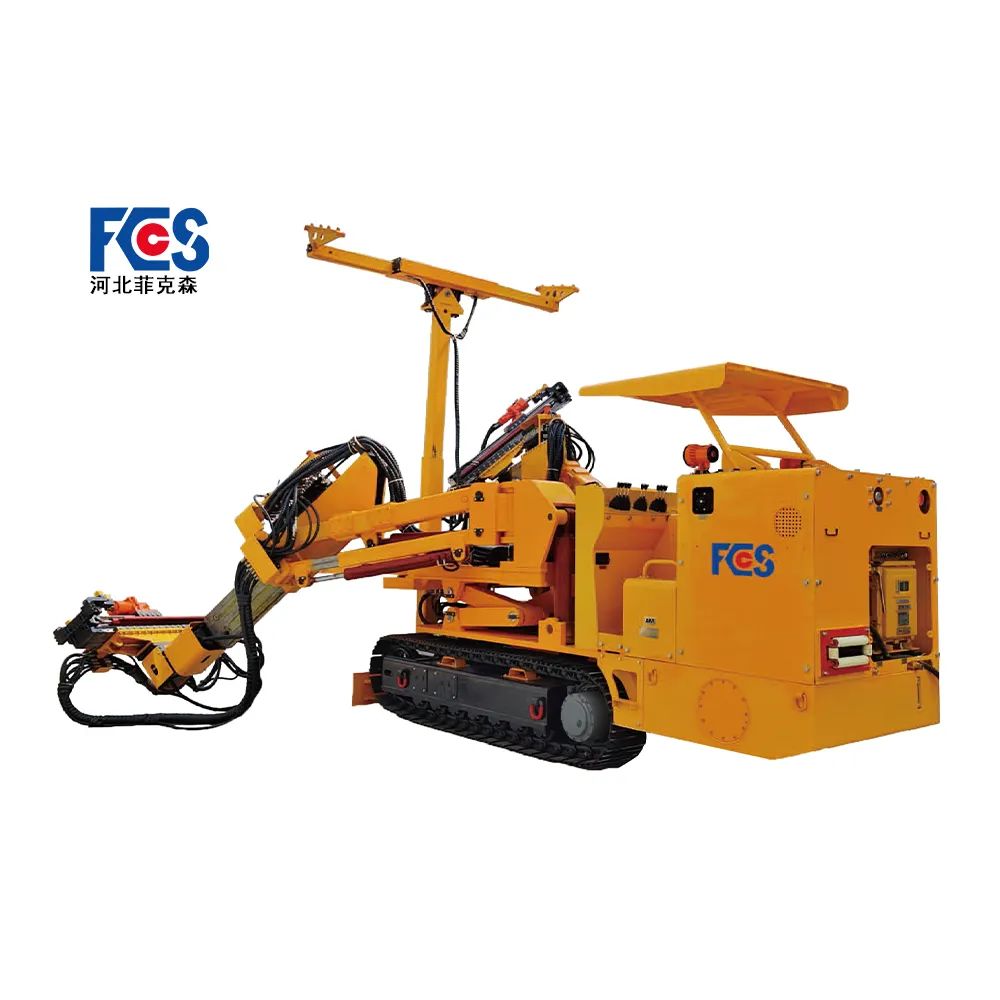
Key specifications (CMM2 series, indicative)
| Parameter | Value (≈ / real-world may vary) |
|---|---|
| Hole diameter | 27–45 mm for anchors; up to 64 mm for cables |
| Drilling depth | 2.4–6.0 m per pass |
| Rotation torque | ≈ 800–1,200 N·m; 0–250 rpm |
| Feed force / stroke | ≈ 12–18 kN / 1.8–2.4 m |
| Hydraulic pressure / flow | Up to 22 MPa / 60–90 L·min⁻¹ |
| Boom configuration | Dual-arm, ±90° swing, 360° collar indexing |
| Tramming / gradeability | ≈ 2.0–2.8 km·h⁻¹ / 25% |
| Noise at operator ear | ≈ 83 dB(A) with canopy |
| Service life | 8–10 years with mid-life overhaul |
Build, process, and testing
Frames and booms use high-strength alloy steel (e.g., Q690) with stress-relief heat treatment; feed cylinders run hard-chromed rods and low-friction seals. Wear points get induction-hardened bushings; hoses meet EN 853 2SN. Methods: CNC machining, full-penetration welds, shot peening on critical brackets.
Testing: hydraulic circuits pressure-tested at 1.5× rating per ISO 4413; weld quality to ISO 5817; salt-spray on coated parts (ASTM B117, 240 h); factory acceptance to EN 16228; vibration/hand-arm exposure checks per ISO 5349. Typical pull-out tests on 32–38 mm resin bolts show ≥ 160–200 kN in competent rock, which aligns with site feedback.
Where it excels
Roadway development with roadheaders, coal and hard-rock mines, metro and hydropower caverns, and, surprisingly, some steep-slope anchoring. The dual-arm layout cuts cycle times by ≈30–40% versus single-boom units while keeping operators further from the face. Maintenance is straightforward—access panels actually open wide enough to work.
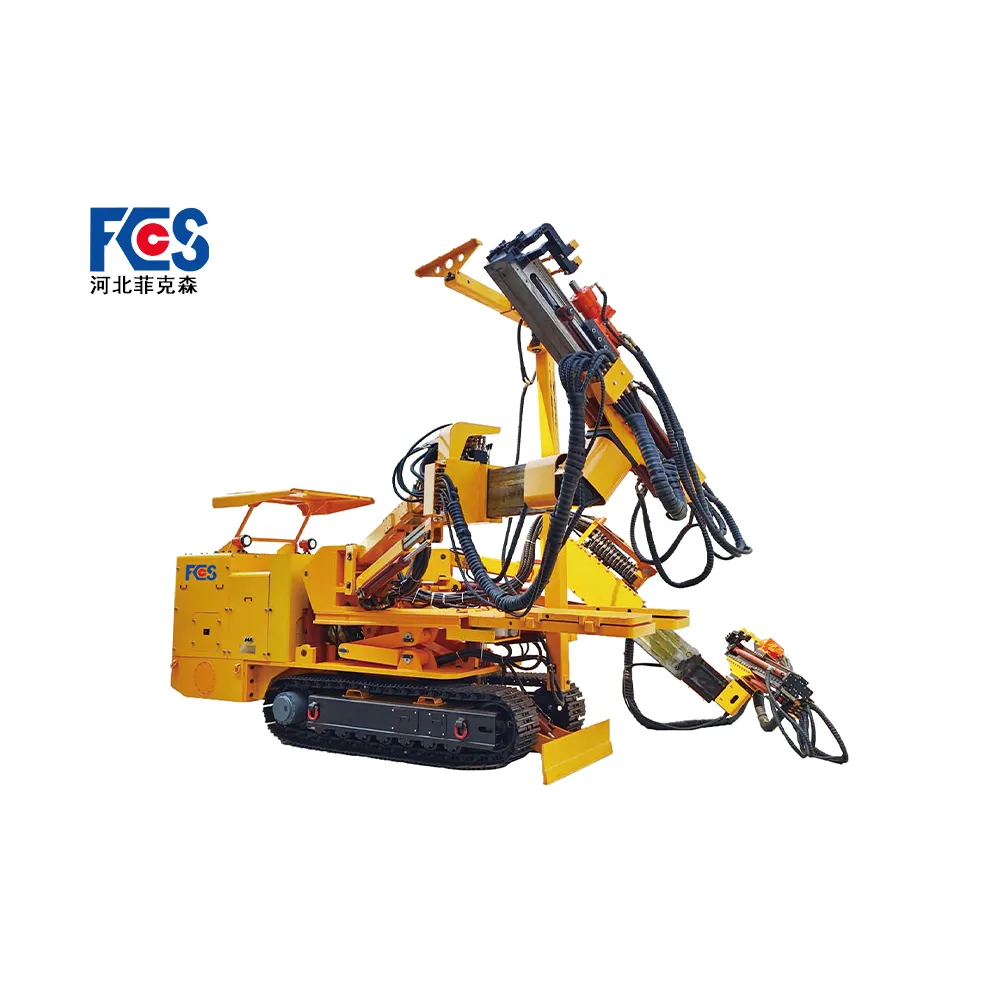
Vendor snapshot (real-world buyer notes)
| Vendor | Key Edge | Certs | Lead Time | TCO (≈) |
|---|---|---|---|---|
| FCCS (CMM2) | Dual-arm automation; tight roadheader integration | CE, MA, ISO 9001 | 8–12 weeks | Low–mid |
| Vendor B | IoT telemetry suite standard | CE, ISO 14001 | 10–16 weeks | Mid |
| Vendor C | High-end components (Rexroth/Parker) | CE, ATEX options | 14–20 weeks | High |
Customization
Options include longer booms, explosion-proof electrics, different drifters, alternative control valves (Rexroth/Parker), wider tracks, and an add-on data logger for torque/penetration curves. Customers say the resin cartridge magazine tweak is worth it if you’re doing cable bolts.
Case notes
- Shanxi coal roadway: cycle time per bolt dropped from ≈14 min to 8.5 min; pull-out avg 180 kN (32 mm resin bolts); uptime 94% over 6 months.
- SE Asia metro cavern (granite): 38 mm × 2.8 m holes at ≈1.6 m/min penetration; dust suppression kept PM levels within site limits; operators liked the pendant controls.
If you’re shortlisting, check parts pipelines and training modules. A rugged Hydraulic Crawler Drill Rig is only as good as the crew behind it—and yes, the best ones make tired headings feel manageable.
Certifications: CE (EN 16228), MA mining safety (China), ISO 9001:2015; hydraulics per ISO 4413; corrosion testing to ASTM B117. That box is properly ticked here.
Sources